The Tools Are Democratic. The Outcomes Will Not Be.
AI is usually described as a great equaliser. As access spreads, more people get capabilities that once required a team, specialist knowledge and a meaningful budget.
I am increasingly convinced it will do the opposite.
Most large organisations have now given their people ChatGPT, Claude, Gemini or Copilot, and the direction is clear enough: capability keeps getting cheaper and easier to reach. But access is not understanding, and the distance between the two is turning into something structural.
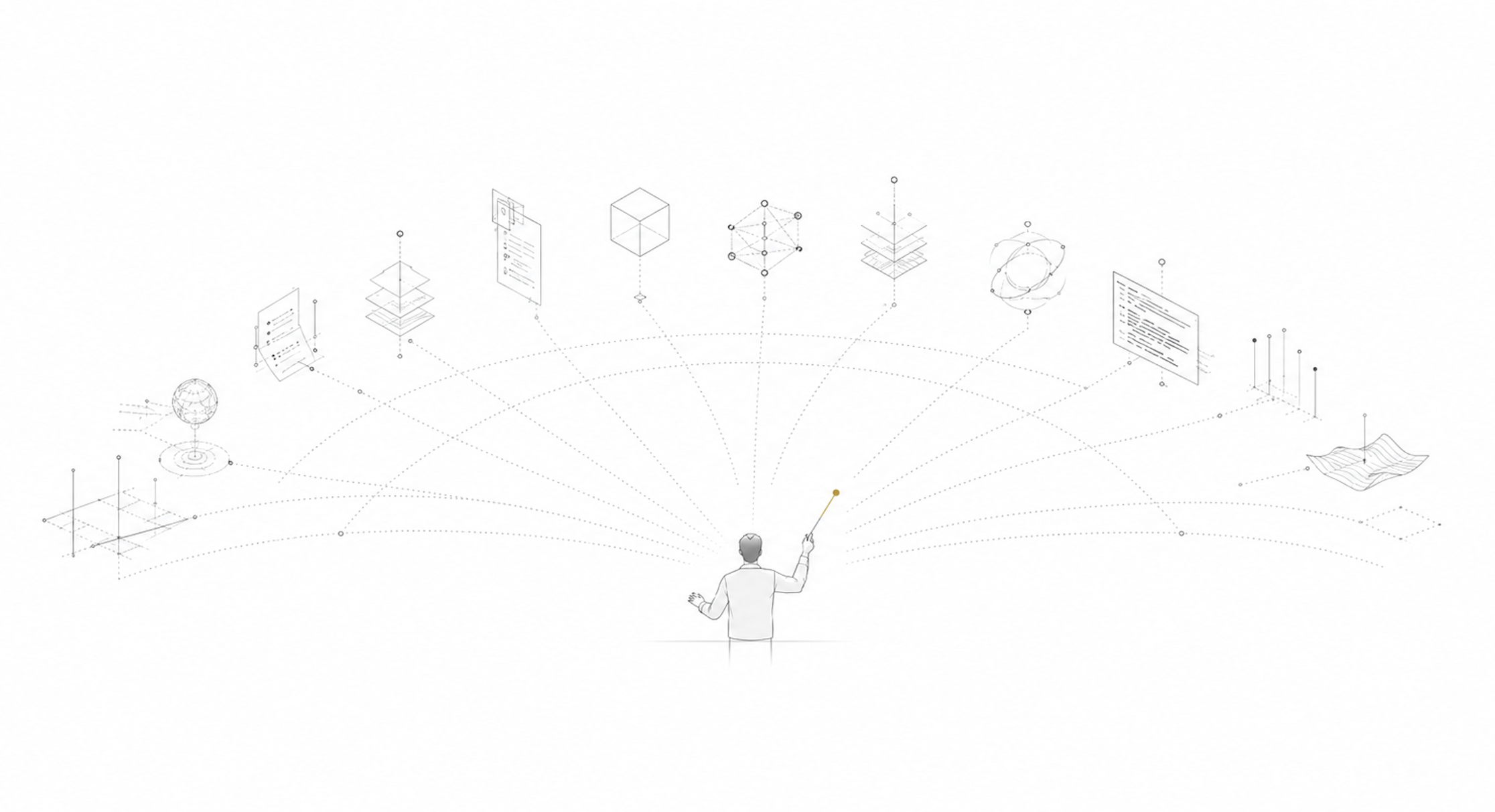
I see engineers running ten or fifteen agents at once: researching, writing, testing and reviewing in parallel, holding the whole thing together in their head like an orchestra conductor. And I see engineers using a copilot to generate unit tests and otherwise working almost exactly as they did three years ago.
Same tools. Same company. Sometimes even the same job title.
The difference is not which foundational model or which tool they have been given. It is the mental model they have built around it.
The threshold
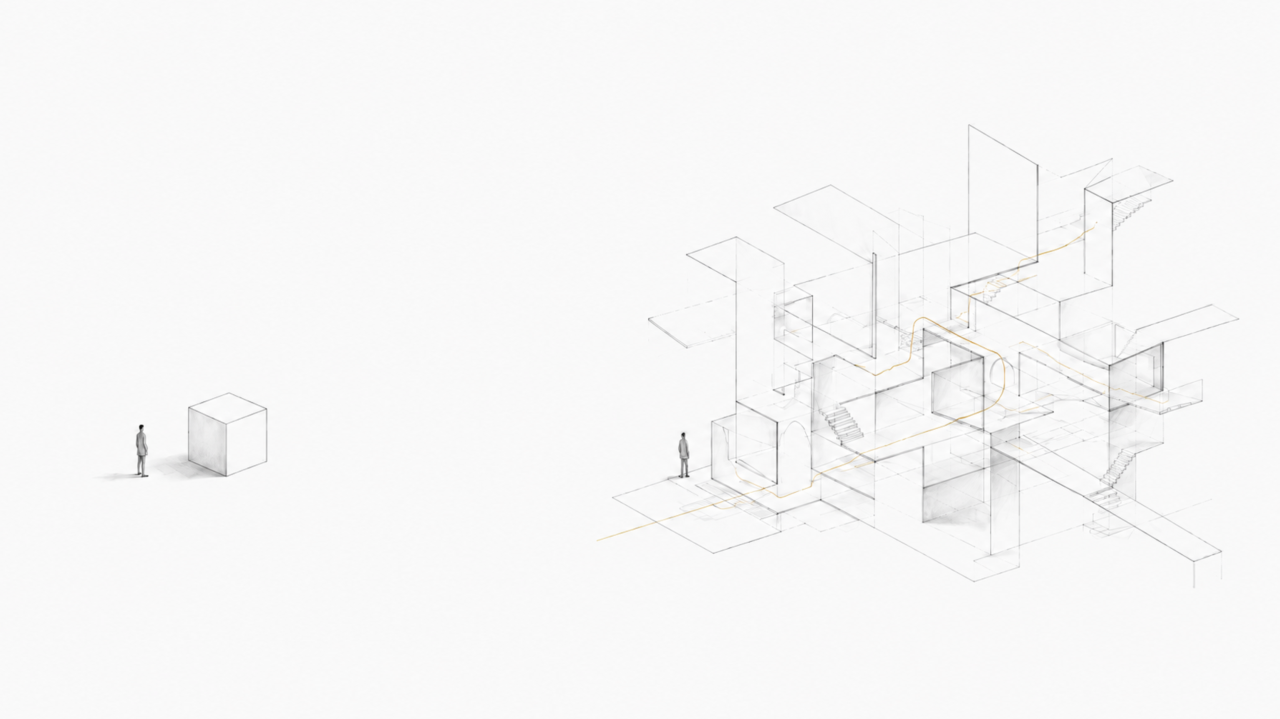
At some point people cross a line, and it is sharper than most organisations realise.
Before it, AI is an assistant. It drafts the email, summarises the document, completes the function, produces the first version of the thing you were going to write anyway. Useful. Incremental. Broadly how vast majority of the world is using chatbots today.
After it, AI becomes a system of execution. You stop asking one model to do one task and start orchestrating several; combining them, checking one against another, running approaches in parallel because the cost of trying has collapsed.
That is not a productivity gain. It changes what feels possible.
We used to talk about the 10x engineer. Now picture that same person with a fleet of agents. The strongest problem solvers were always the ones who could hold more of the system in their head and test more possibilities than everyone else, and both of those constraints have suddenly become much less binding.
Recently I find myself describing problems to some of our engineers in passing: “Imagine we had …..”. Thirty minutes later they came back with a working output, evidence pulled from several sources, the assumptions they had tested, and the questions that still needed a human decision. No project plan, no handoff, no waiting for another team.
The striking part was not the speed. It was how much of the work one person had been able to hold together and direct at once.
Curiosity is the actual dividing line
The comforting assumption is that training will close this gap. I am not sure it will.
Organisations should absolutely provide the tools, guidance, workshops and safe paths to production. All of that is necessary. But there is a limit to how much curiosity can be transferred through a workshop.
The people moving fastest are not waiting for formal training. They are reading, testing, watching what others are doing, finding out what is possible well before their organisation has written a policy for it. Some move so far ahead that the organisation ends up chasing them. They build the thing before a deployment path exists, and force the rest of us to work out how it can be run securely.
Nobody taught them to start. They were curious enough to begin without permission.
None of this is new. There have always been more opportunities available than people willing to pursue them, and access to knowledge has never guaranteed the motivation to use it. What AI changes is the size and speed of the consequence. The gap between the curious and the passive used to compound slowly.
Now it compounds weekly.
The strongest performers I worked with ten years ago are, for the most part, the strongest performers today. AI has not replaced their judgement, energy or curiosity. It has multiplied them.
What happens to the people who cross it
There is a consequence here that receives very little attention. The people who cross the threshold become professionally lonely.
They see possibilities others cannot yet see. They move faster than the processes around them. They sit in meetings revisiting a question they could have answered empirically in an afternoon, and something in them quietly disengages.
Their capability keeps compounding. The environment around them often does not.
Eventually they begin looking for somewhere with harder problems, more curious peers, and leaders who understand what they are now capable of. So the risk for many organisations is not only that some of their people fall behind. It is that the people furthest ahead conclude, without ever saying it aloud, that the organisation cannot keep up with them.
The part nobody can do for you
There is an organisational responsibility in all this: access, security, guidance, room to learn. Those are real, and worth taking seriously. But there is also a personal responsibility, and it is less comfortable to say aloud.
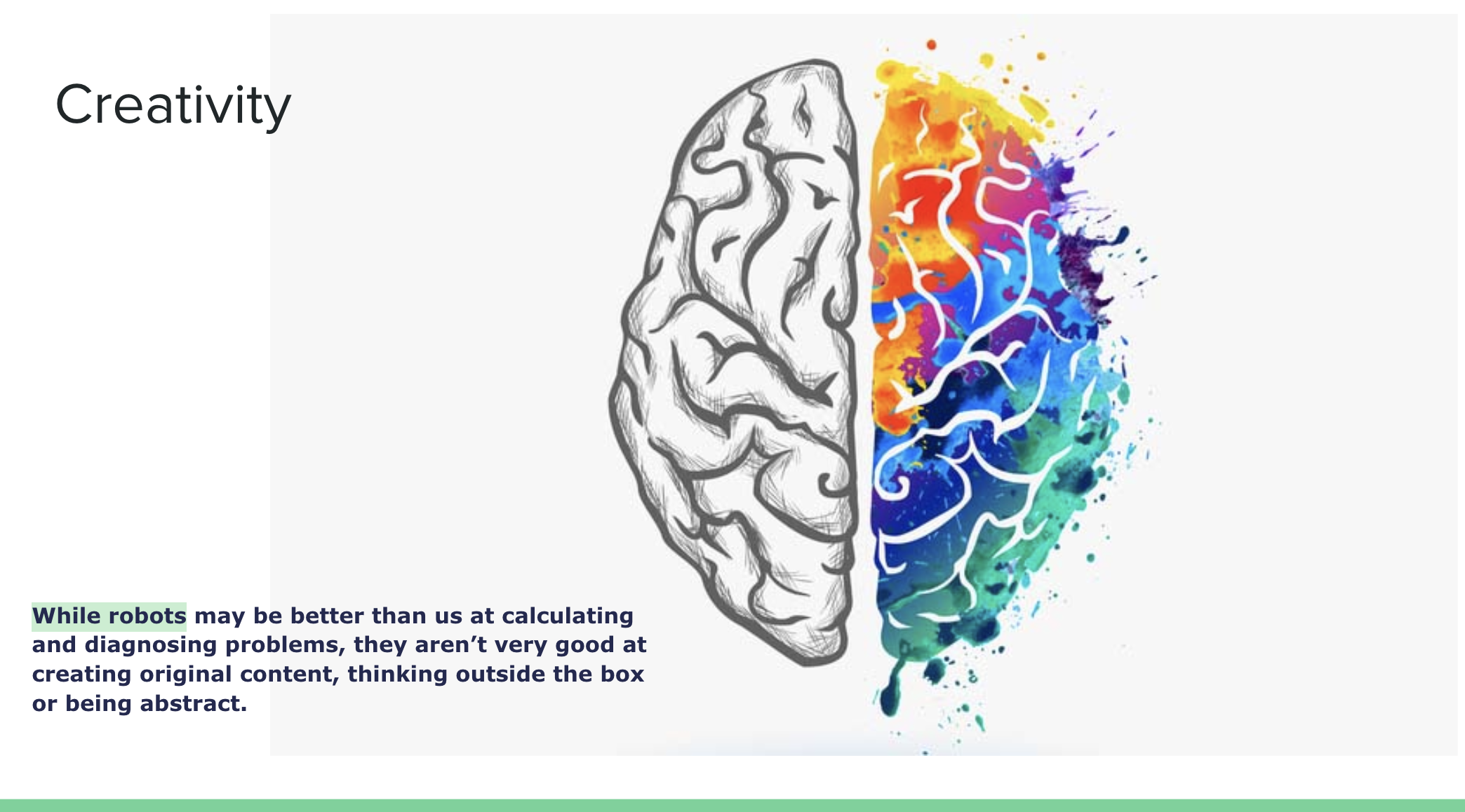
In 2019 I gave a talk at my son’s school about the future of technology. I told a room of secondary school children that the durable skills would be critical thinking, creativity, curiosity, and the ability to connect disciplines. One of my slides confidently explained that machines “aren’t very good at creating original content.”
Half of that talk has aged well. That slide has not. The machines got creative faster than almost anyone expected: including the people paid to expect it.
But the conclusion has only hardened. The key was never the technology. It was curiosity, and the willingness to keep learning as the ground moved.
The next few years will not be shaped only by who was granted access to AI. They will be shaped by who chose to understand it. That is not a matter of talent or seniority or which company issued the licence. It is a matter of whether someone chose to spend time finding out what the technology can actually do, before anyone required them to.
For anyone starting their career now, this may become one of the most important forms of economic literacy. Those who learn to use these systems to create, to solve problems, to compound their own capability will have options that are difficult to imagine today. Those who wait to be trained will experience the consequences just as clearly, from the other side.
The tools are democratic, the outcomes will not be.