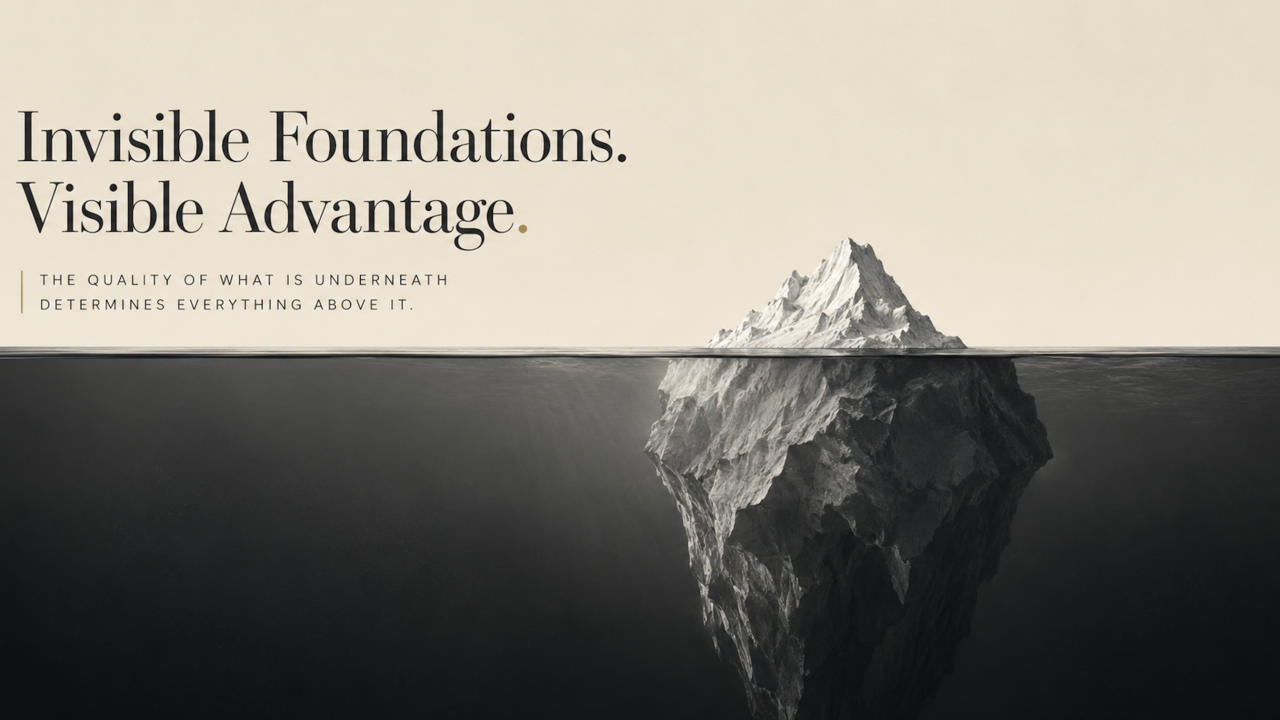
The Best Technology Is Invisible Until It Matters
The best technology is often invisible. Until it breaks.
Until the business needs to scale. Until inventory needs to be trusted. Until orders need to flow. Until AI needs clean, connected data to reason from. Until a premium customer experience depends on hundreds of systems working together in real time.
That is when technology stops being back office. It becomes the operating system of the company.
The work no one talks about
Most conversations about technology focus on what is visible. The new app. The launch. The AI feature. The migration that is celebrated with afternoon drinks.
The work that actually determines whether a company can move quickly sits underneath all of that, and almost no one outside the technology organisation sees it.
Clean architecture. Reliable platforms. High quality data. Clear ownership. Secure systems. APIs designed with care. Event flows that help the business react faster. Interfaces that reduce friction for the people using them.
None of it sounds fashionable. None of it makes for a good headline. But it is the difference between a company that can move and a company that only talks about moving.
I have come to believe that the quality of a technology organisation is best measured not by the number of systems it runs, but by the quality of the layer underneath. Architecture, data, reliability, integration, security, and the speed at which the organisation can safely change things.
Everything else is downstream of that.
Speed is downstream of architecture
There is a common assumption that quality and speed sit on opposite ends of a trade off. That if you want to move fast, you accept some mess. That if you want quality, you accept some slowness.
In my experience this is rarely true, at least not in the way people assume.
The companies that move quickly almost always have stronger foundations than the ones that do not. Their architecture is cleaner. Their data is more trustworthy. Their teams have clearer ownership. Their platforms absorb change rather than resist it.
What looks like speed on the surface is usually the visible result of years of quiet, disciplined work underneath.
The companies that struggle to move are often the ones that skipped that work. They are not slow because they lack ambition. They are slow because every new initiative has to navigate around weak data, brittle integrations, unclear ownership, and architecture that was never designed for what the business is now trying to do.
Uber is an obvious example. The thing that makes a ride appear in thirty seconds is not the app. It is the matching engine, the location data, the pricing system, the payments rail and the supply model, all working together in real time. The interface is the part the customer sees. Everything underneath is what makes the experience possible at all. The same logic applies to any premium experience. The visible quality is downstream of the invisible architecture.
Real speed comes from clarity, ownership, and strong foundations. Everything else is theatre.
AI runs on what sits underneath
In Competing in the Age of AI, Iansiti and Lakhani describe the modern firm as an *“*AI factory” built on four components: a data pipeline, algorithms, an experimentation platform, and the software infrastructure underneath. Three of the four are foundations. The model is the visible piece. Everything else is the invisible work that makes the model useful.
A lot of organisations are trying to apply AI to their business. Most of them will find that the limiting factor is not the model. It is everything around the model.
AI needs clean, connected data to reason from. It needs reliable signals about inventory, customers, products, transactions and operations. It needs systems that can act on its outputs without breaking. It needs context, and context lives in the architecture.
You cannot put an intelligent layer on top of an incoherent one and expect coherent results.
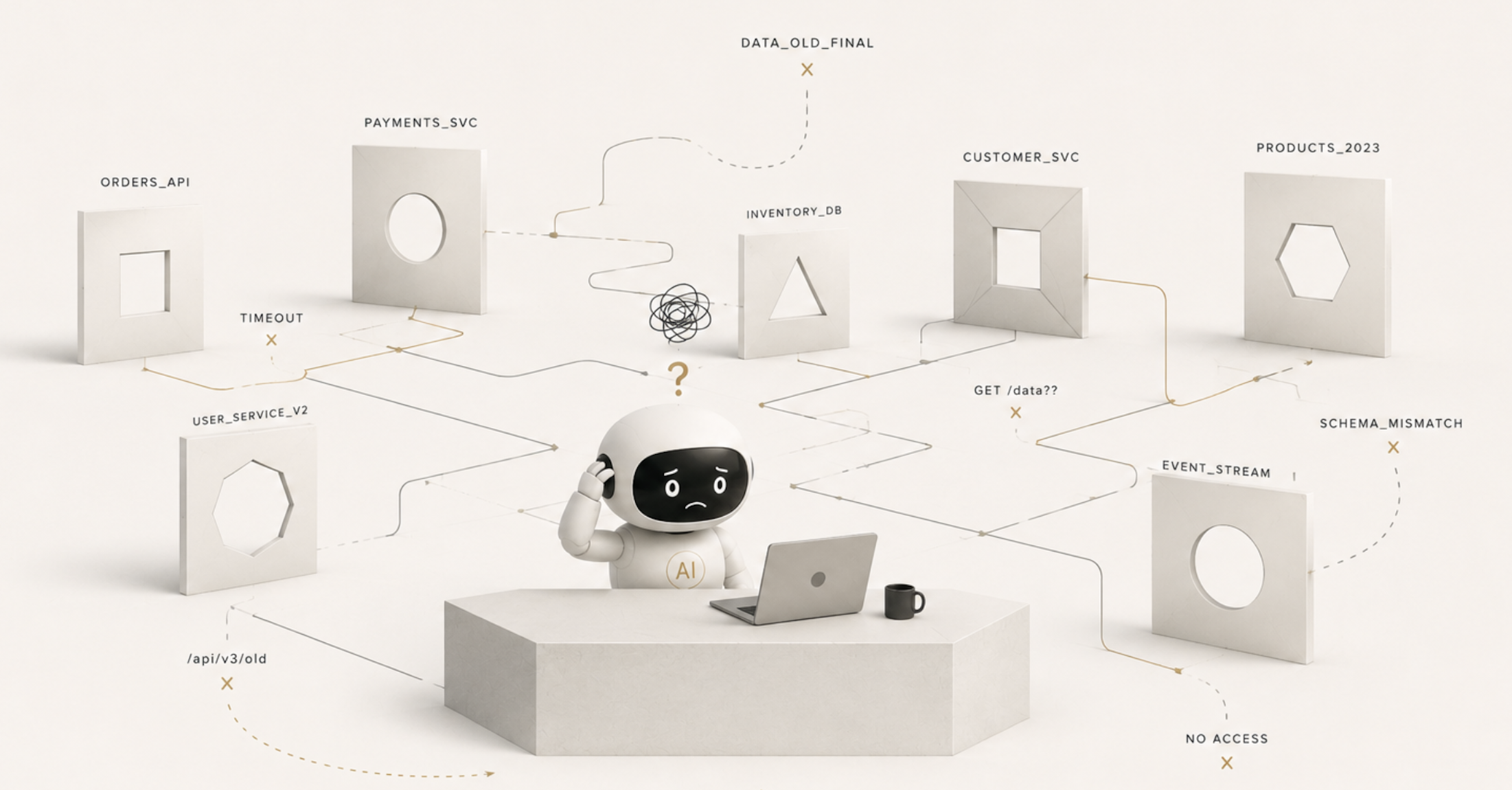
The companies that will get the most from AI over the next few years are the ones that have already done the unglamorous work. Their data is in order. Their systems talk to each other. Their teams understand the difference between a demo and a deployed capability.
For everyone else, AI will expose what they were hoping no one would notice.
Consider the gap this creates. Ant Group serves over seven hundred million customers with around nine thousand employees. Traditional banks need hundreds of thousands of people to serve a fraction of that. The difference is not the algorithm. It is the operating model underneath it.
Calm scale
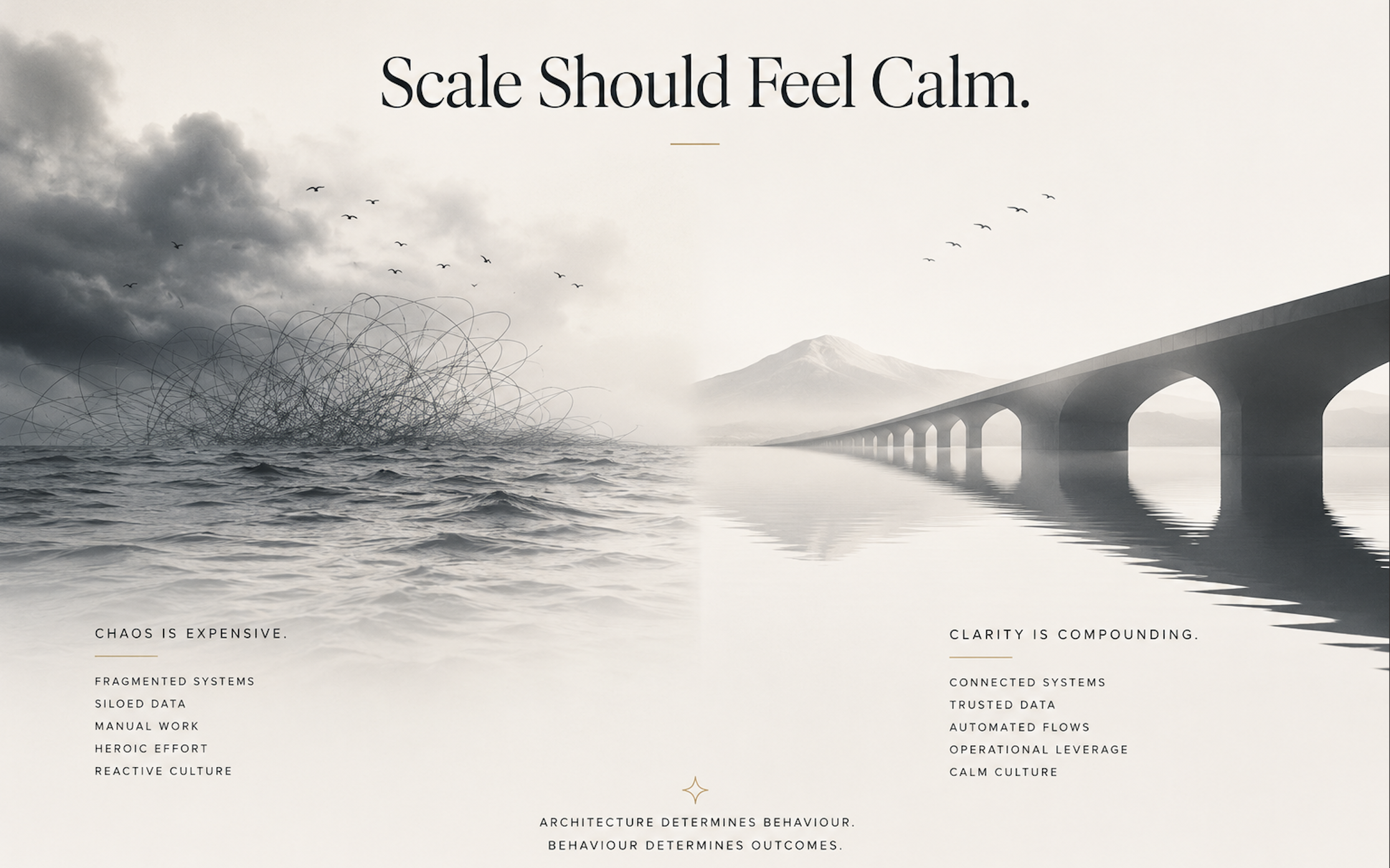
There is a particular feeling inside a company that has built things well. Things change, but they do not feel chaotic. New markets open without the systems straining. New products launch without months of integration work. New leaders join and find that the operating rhythm is already there.
Scale feels calm rather than chaotic.
The opposite is also recognisable. Heroic effort to ship things that should be routine. Repeated incidents around the same fragile area. Endless meetings to reconcile data that should already agree. A sense that everything is moving, but nothing is compounding.
The difference is rarely about effort. It is about what was built underneath, and how seriously the standards were held over time.
Premium brands need premium systems
A premium brand cannot run on average systems.
The quality of a physical product, the care in its design, the precision in how it is made, all of that is visible to the customer. The systems behind it are not. But they shape the experience anyway.
They shape whether the product is actually available when the customer wants it. Whether the order arrives correctly. Whether the website is fast. Whether the recommendation is relevant. Whether the service team has the context they need. Whether the brand shows up coherently across every touchpoint, or only most of them.
Digital systems should carry the same ambition as physical products. Precision, craft, resilience, quality.
Craft is not decoration. It is how standards become visible.
The leadership point
Technology leadership is not only about chasing the next wave. Anyone can do that, and a lot of people do.
The harder work is building the layer that lets the organisation absorb the next wave faster than anyone else. That work is rarely celebrated in the moment. It compounds quietly, and then one day the company finds it can do something its competitors cannot, and no one can quite explain why.
The explanation is usually underneath, in work done years earlier by people who cared about the quality of things that no one would see.
The companies that move best are usually the ones with the strongest foundations underneath. And the ones that keep moving are the ones who know the work is never done.
“Excellence is achieved by the mastery of fundamentals.” - Vince Lombardi